← Back to Research & Publications
The god Min
Divine image, power and sovereignty in Upper Egypt
A very ancient deity
The god Min is one of the oldest figures in the Egyptian pantheon. His cult is attested from Predynastic times and developed throughout pharaonic history.
It is traditionally associated with:
- with fertility and regeneration;
- with masculine power;
- with harvests;
- with the territories of the Eastern Desert.
Min is particularly honored at Coptos and Akhmîm, two major centers of Upper Egypt.
However, reducing Min to these generative and expeditionary dimensions alone offers only a partial reading. Middle Kingdom sources show that his role extends far beyond this traditional characterization.
An immediately recognizable iconography
Min is depicted in an ithyphallic anthropomorphic form, with his arm raised holding a flail.
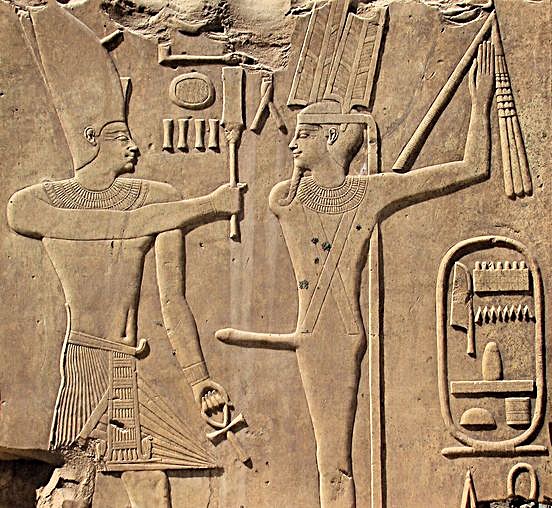
This image, stable and codified, spans the centuries. It is not limited to an evocation of fertility: it also constitutes a staging of power, mastery and victory.
At different periods, Min is integrated into theological recompositions that give rise to composite forms such as Amon-Min or Min-Horus-nakht. These associations are not simple divine juxtapositions: they reflect cultural and political reconfigurations.
The epithet “powerful of the gods” thus refers to an active and structuring conception of divine power, capable of supporting monarchical authority.
My work on the god Min
Rereading a divine figure
I dedicated my doctoral research to the god Min from the First Intermediate Period to the end of the Second Intermediate Period.
My thesis, entitled:
“Min, the “mighty of the gods”. The god Min, from the First Intermediate Period to the end of the Second Intermediate Period: reinterpretation of a divine image in the service of power »
(supervised by Pierre Tallet, defended in 2017), offers a rereading of the god based on an expanded corpus: Abydenian steles, hymns, rock inscriptions, monumental programs and royal titles.
The objective was to understand how a seemingly stable divine image can be invested with renewed political meanings.
Abydos and the emergence of Min-Horus-nakht
From the 12th dynasty, the cult of Min experienced notable development at Abydos, in the heart of the Osirian domain.
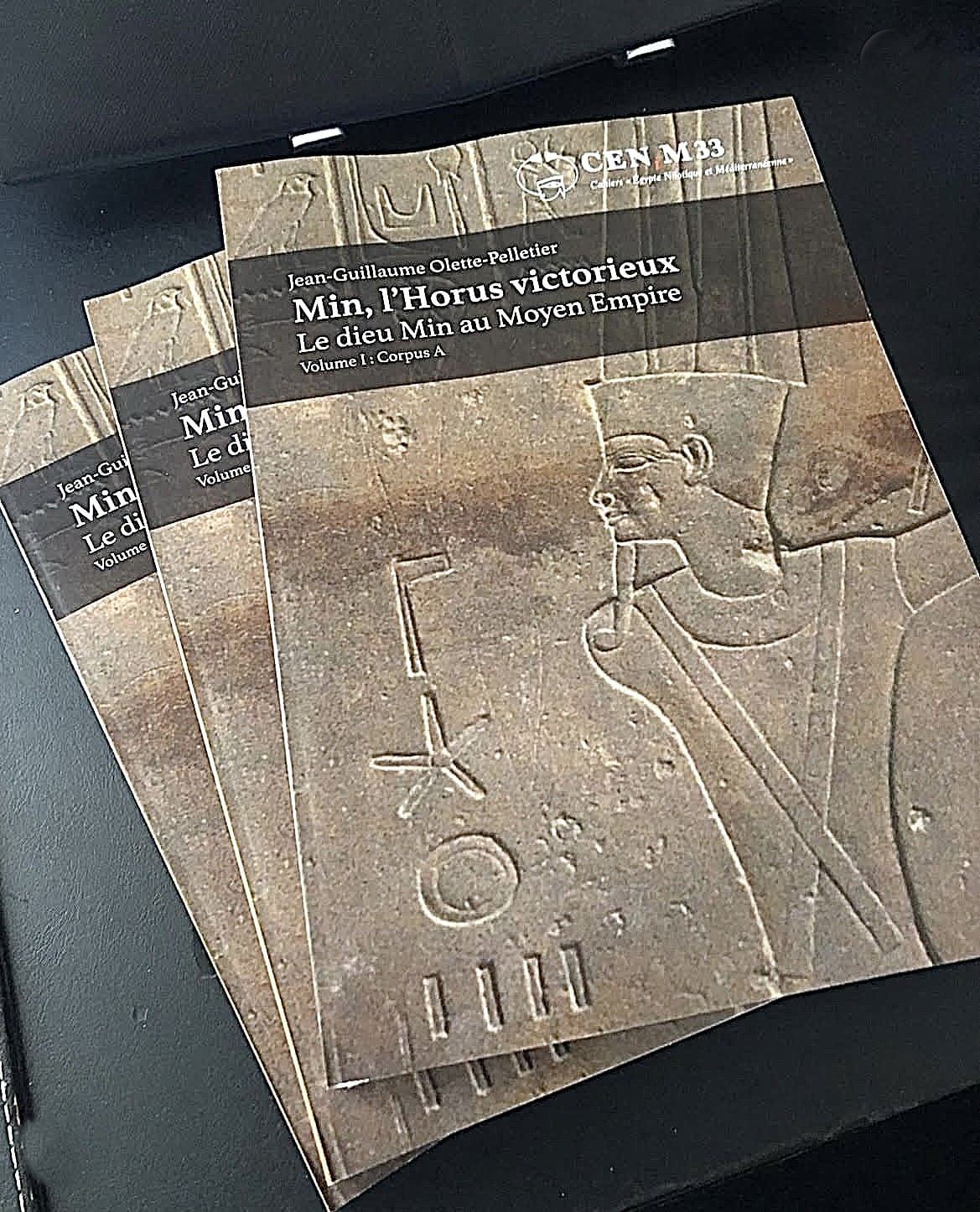
It is in this context that the theonymic form Min-Horus-nakht, “Min, the victorious Horus”, appears. This transformation is not a simple syncretism. It places Min in a dynastic logic: heir of Osiris, he becomes guarantor of the transmission of power.
The hymns and steles of the Middle Kingdom highlight formulas which evoke:
- victory over adversaries;
- restoration of the court;
- the defense of the paternal heritage;
- the control of sovereignty.
It is significant that these texts do not develop the generative dimension traditionally associated with the god. The emphasis is on victory, authority and legitimacy.
Image, power, and monarchical construction
In the Middle Kingdom and during the Second Intermediate Period, Min appears as a deity closely linked to royal ideology.
Certain scenes show a profound assimilation between divine image and monarchical figure: the sovereign adopts the iconography of the ithyphallic god and receives regalia from other divinities. This graphic osmosis underlines the monarchical dimension of Min.
The god becomes:
- guarantor of dynastic continuity;
- protector of the administrative and military elite;
- a victorious figure embedded in political discourse.
Min does not disappear as a fertility divinity; but in Middle Kingdom sources, this dimension gives way to an explicitly monarchical and warlike definition.
Studying Min therefore implies restoring to the divine image its capacity to structure the discourse of power.
A cross-disciplinary study
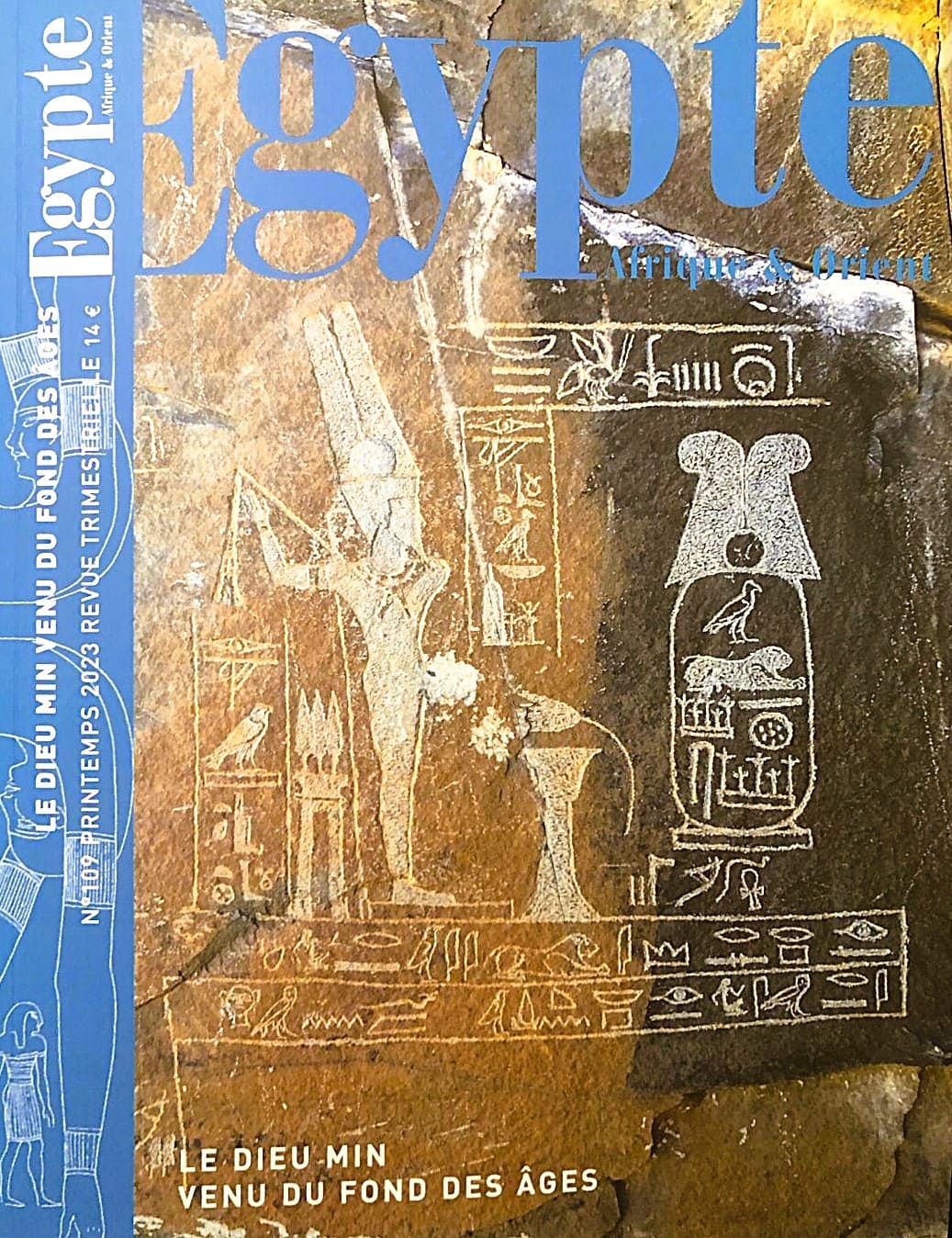
Research devoted to the god Min also informs my work on desert spaces, notably in Ouadi Hammamat.
In these expeditionary contexts, Min appears as a protective deity of royal enterprises, but also as a territorial figure associated with sovereignty exercised on the margins.
In this regard, the Ouadi Hammamat constitutes a privileged observation site. Expeditionary inscriptions show that Min intervened as guarantor of the legitimacy of royal missions and the exercise of power in desert spaces. The territory is not a simple geographical framework: it becomes an active support for monarchical discourse.
The iconographic analysis here joins the study of spaces and practices.
Methodology
My approach is based on a cross-reading of texts, images and their contexts.
It combines:
- philological analysis;
- paleographic and epigraphic study;
- examination of iconographic programs;
- historical and cultic contextualization.
It is not only a question of identifying representations, but of understanding how they produce meaning and participate in the architecture of power.
Publications related to the god Min
Work
Olette-Pelletier, Jean-Guillaume,
Min, the victorious Horus. The god Min in the Middle Kingdom, CENiM 33, Montpellier, 2023.
Published by
CENiM – ENiM Editions
,
online version available on
Academia
.
Thesis
Olette-Pelletier, Jean-Guillaume,
Min, the “mighty of the gods”. The god Min, from the First Intermediate Period to the end of the Second Intermediate Period: reinterpretation of a divine image in the service of power
,
Doctoral thesis in Egyptology, Sorbonne University (Paris IV), 2017.
Available via
theses.fr
and online on
Academia
.
Articles
Olette-Pelletier, Jean-Guillaume,
“A dazzling divine force. On the meaning and reading of the theonym sign Min (R22 / R23)",
Nilotic and Mediterranean Egypt (ENiM)
,
no 15, 2022, p. 35-49.
Olette-Pelletier, Jean-Guillaume,
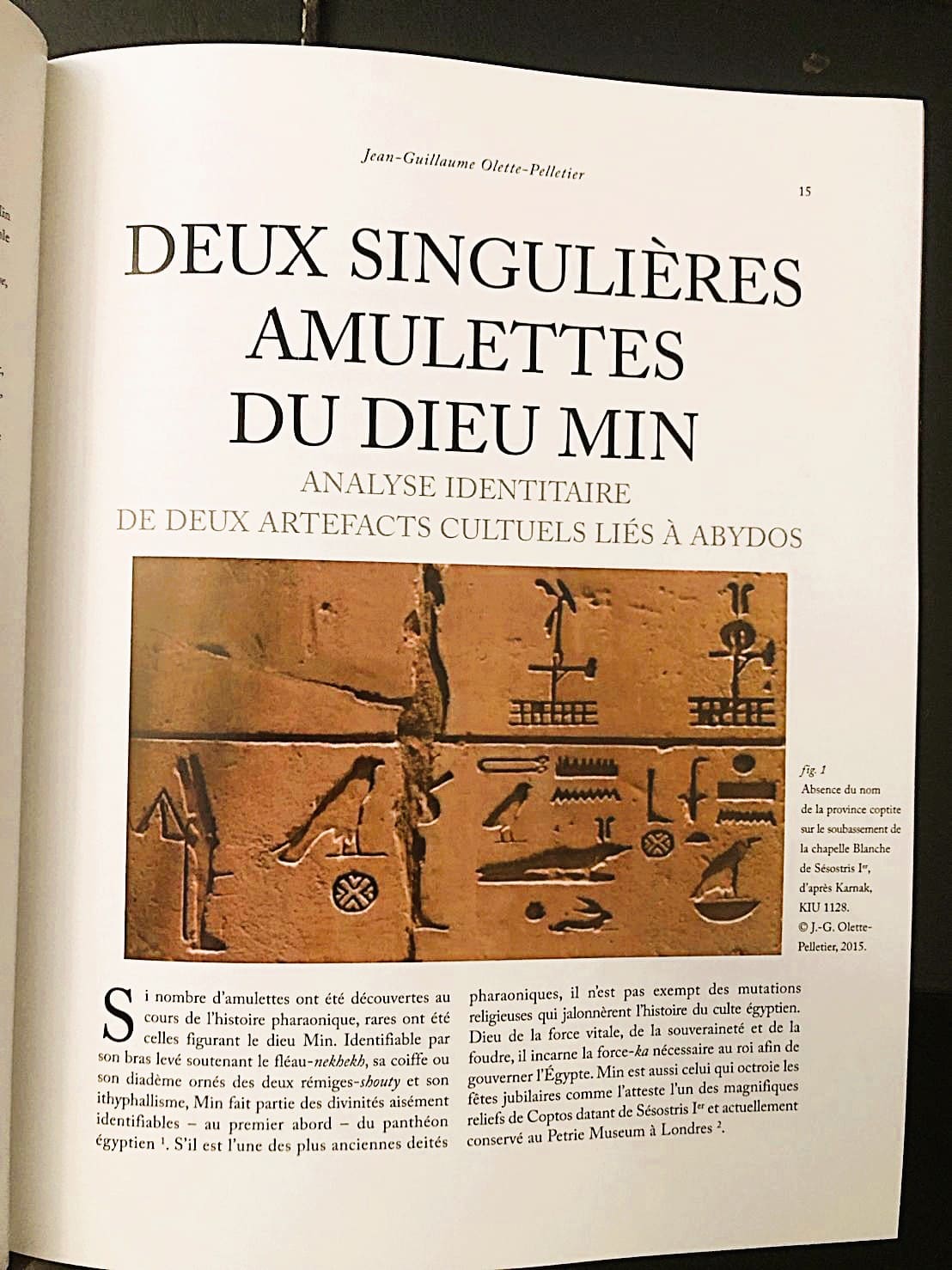
“Two singular amulets of the god Min: Identity analysis of two cult artifacts linked to Abydos”,
study available online at
Academia
.
Olette-Pelletier, Jean-Guillaume,
“The god Min “protector of the moon”: lunar aspects and roles of the god of fertility”,
Egypt, Africa & East, supplement to no. 72, 2014, p. 9-16.
Online version available at
Academia
.
• Olette-Pelletier, Jean-Guillaume,
“Sokar and the sehenet of Min: an unusual association in a funeral context”,
Göttinger Miszellen, no 238, 2013, p. 91-98.
Online version available on
Academia
.
• Olette-Pelletier, Jean-Guillaume,
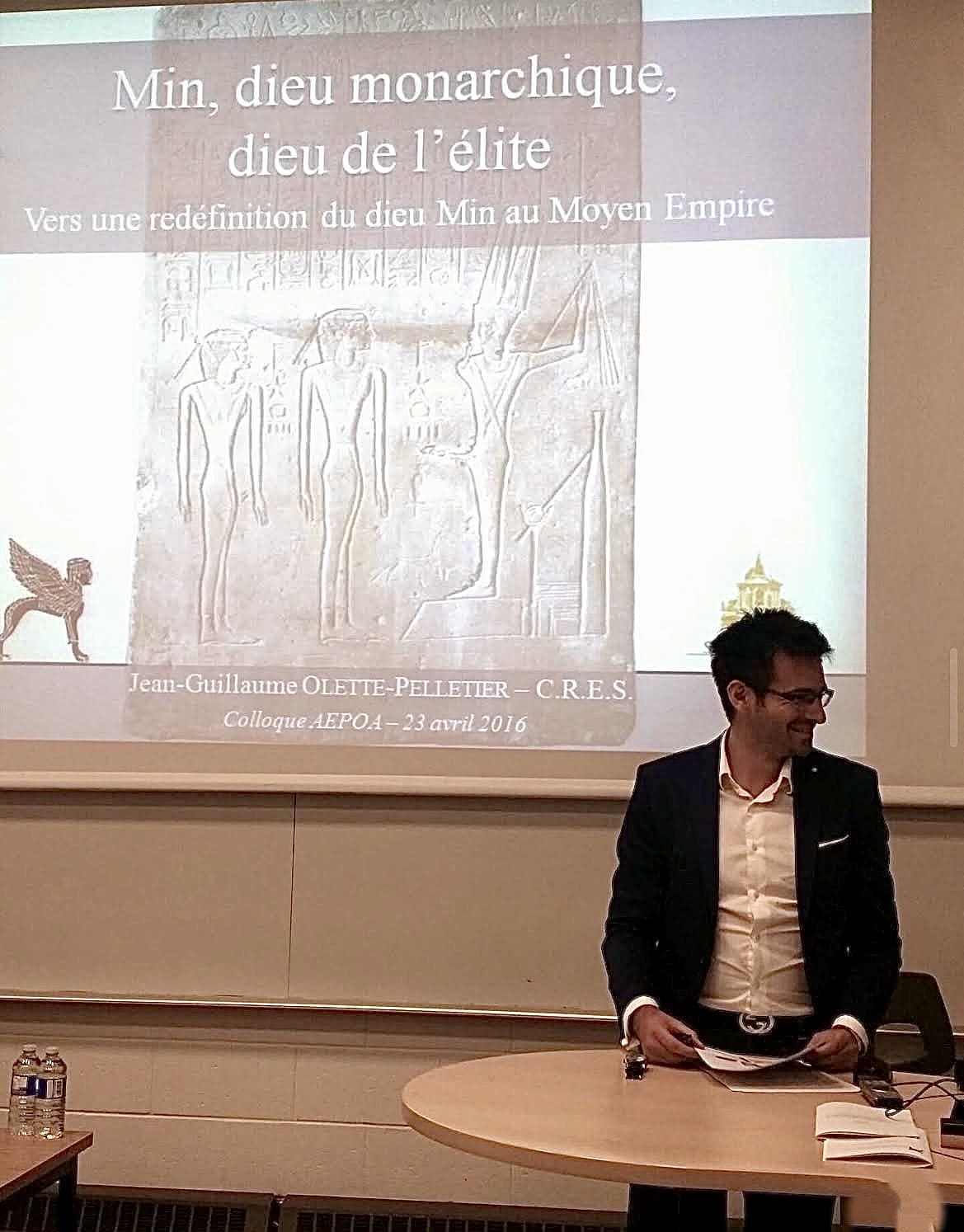
“Min, monarchical god, god of the elite: towards a redefinition of the god Min in the Middle Kingdom”,
communication presented at the AEPOA conference (UQAM), April 23, 2016.
Viewable program
here
.
Exhibition catalog chapter
• Olette-Pelletier, Jean-Guillaume,
« Min and the other Egyptian gods »,
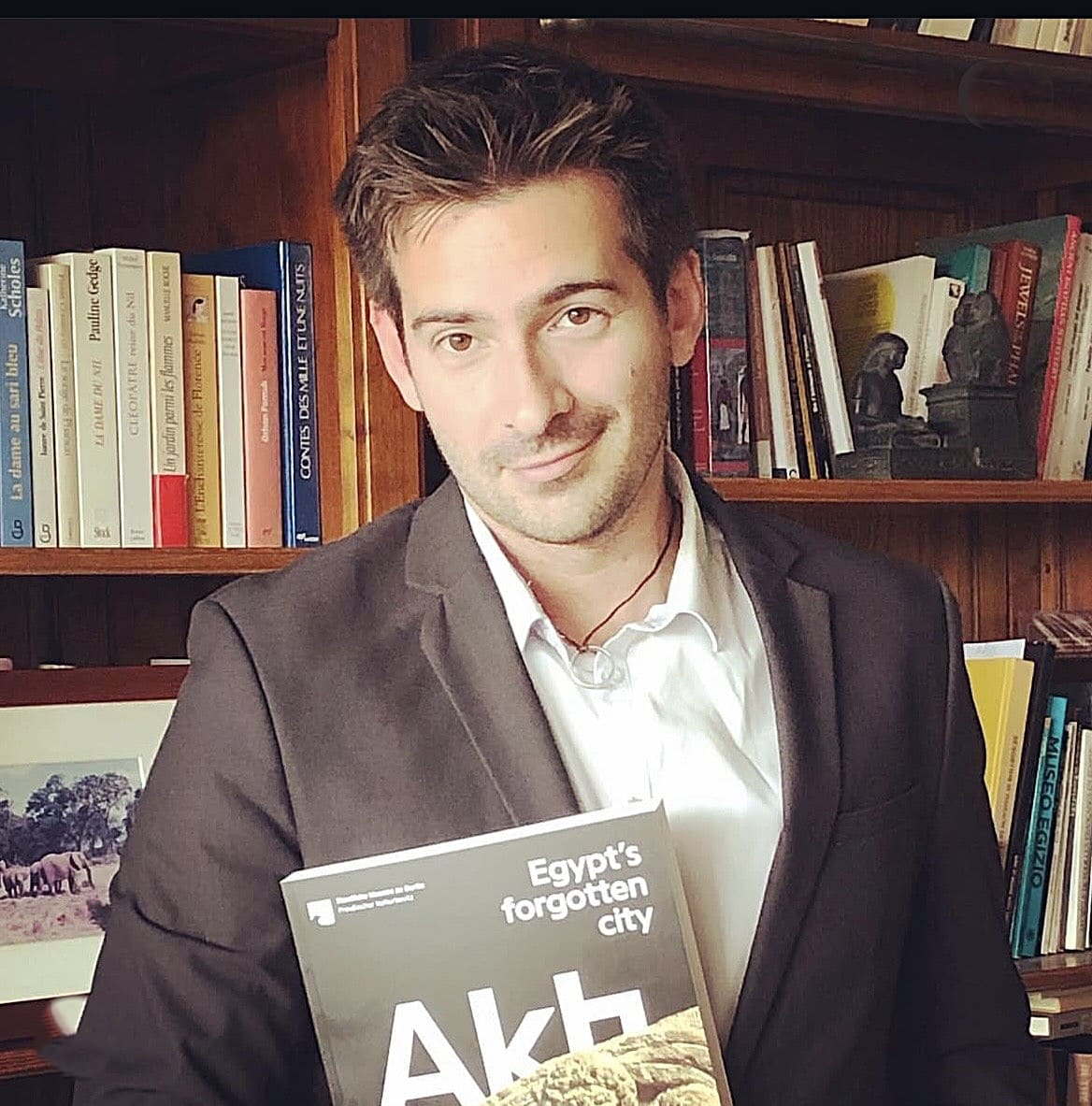
in Akhmîm. Egypt's Forgotten City,
exhibition catalog, Staatliche Museen zu Berlin, 2021, p. 68–73.
Viewable version on
Academia
.
This chapter analyzes the interactions and mutations of the cult of Min with other Egyptian deities, particularly in the cult context of Akhmîm.
Conferences & public interventions
- • « The god Min: strength and fertility in Egyptian religion » (2014)
- • “Min-Horus-nakht: reappropriation of a divine image in the service of pharaonic power”, ANTHEIA seminar, Sorbonne, 2015.
- • “Min, master of the deserts…”, conference given to the Papyrus Association, Palais des Beaux-Arts in Lille, February 27, 2016.